

Development of an online store
Advantages of customized development of an online store
Custom online store development allows you to create a unique design that matches your company’s brand identity. This not only attracts customer attention, but also creates a positive user experience. Customers can easily navigate the site, which boosts sales and brand loyalty.
A customized online store can be easily adapted to meet specific business needs. This applies to both the functionality of the site and its ability to scale with the growth of your business. In the future, you can easily add new sections, integrate new payment systems or expand functionality without major changes to the basic architecture.
One of the main advantages of custom development is the ability to provide a high level of security. You can integrate state-of-the-art data security features, which reduces the risk of hacker attacks and confidential information leaks. This is important not only to protect your business, but also to maintain the trust of your customers.
Custom development allows you to take into account all aspects of SEO optimization from the very beginning of creating an online store. You get a site that is well indexed by search engines, which increases its visibility in search results. This contributes to the inflow of organic traffic and increases the number of potential customers.
A customized approach allows you to integrate your online store with any third-party services, such as CRM systems, analytical platforms or payment gateways. This ensures convenient business management and allows you to automate many processes, which saves time and resources.
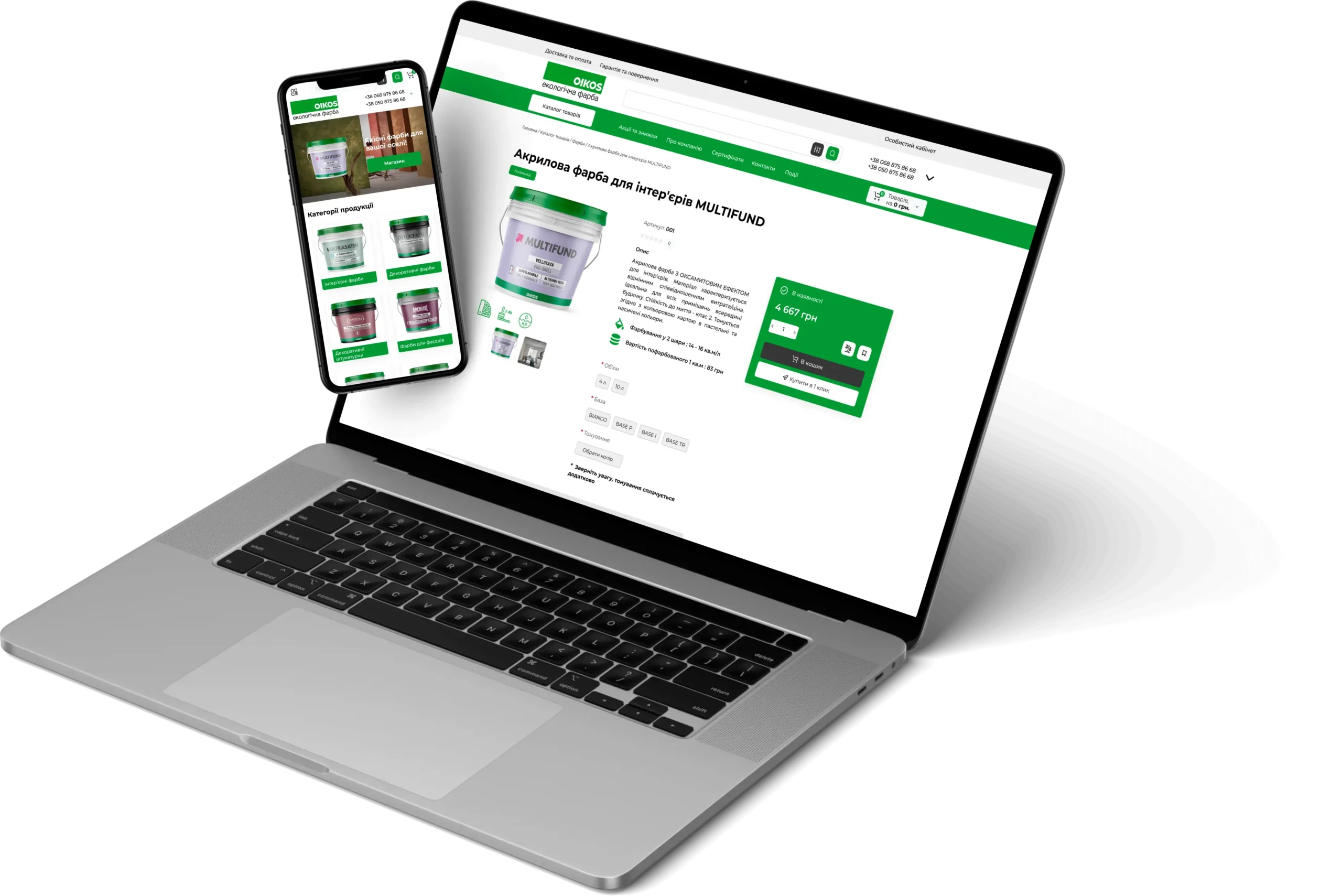
Complex development online store includes









Integration with analytics, automation and CRM services will help simplify work with incoming requests, automate some business processes, and also get complete analytics about the site performance.






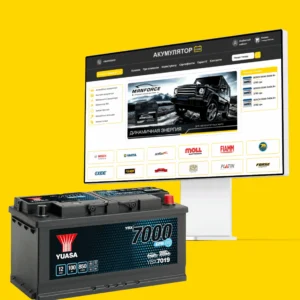
Stages of online store development
- 01. Analysis and Strategy
- 02. Prototyping
- 03. Interface Design
- 04. Development and Integrations
- 05. Testing and Optimization
- 06. Launch and Support
We define a clear vision for the future online store by identifying business goals, target audience, product range, and purchasing scenarios. We analyze competitors, select the optimal platform and functionality, and prepare a detailed technical specification focused on driving sales.
We design a logical website structure including the homepage, catalog, filters, product pages, cart, and checkout process. We build a clear user journey and intuitive navigation to ensure a smooth purchasing experience.
We create a modern, fully responsive design with a strong focus on UX/UI. This ensures easy product selection, fast interaction, and strong visual appeal. The design aligns with your brand identity and increases customer trust.
We develop the online store using the selected CMS or framework. We configure the catalog, filters, search, cart, checkout, payment systems, and integrations with CRM or accounting platforms. Performance, speed, and technical structure are fully optimized.
We perform comprehensive testing of all website components, including functionality, responsiveness, loading speed, integrations, and forms. All issues are identified and resolved prior to launch.
We deploy the website to hosting, set up analytics, SEO tools, and monitoring systems. We provide management guidelines and ongoing support after launch.



























All agreements are formally documented: website structure, integrations, project stages, and timelines. You clearly understand the scope of work, deadlines, and receive transparent, well-controlled collaboration.

We build more than just online stores — we create effective sales tools. We focus on UX, visual design, SEO structure, conversion elements, and full mobile optimization tailored to your business needs.

Every project stage is planned in advance, from design to payment system integration. All deadlines are defined in the contract and strictly followed throughout the entire process.

We offer a convenient payment model: milestone-based payments according to project stages or a fixed price for the full scope of work. You choose the option that works best for you.
Frequent questions
Why does development cost 90,000 UAH when you can do it for $500 on a constructor?
Constructors offer limited template solutions that do not take into account the specifics of your business. Professional development for $90,000 is a comprehensive approach: well-thought-out logic, technical reliability, high Core Web Vitals scores, full SEO optimization, and the ability to integrate with CRM, ERP, and payment systems. You get a platform with data security control that easily scales as your project grows. A website builder limits your development opportunities, while a custom solution works for your business goals without technical barriers.
Will I be able to add products and manage the store myself?
Yes, we create a convenient admin panel and provide comprehensive training for your team. Adding products, changing prices, processing orders — all this will be available without any technical knowledge.
What if I need to add new functionality in a year?
We design stores with scalability in mind. Any new functionality, integrations, or modules can be added without reworking the entire platform.
Is SEO optimization included in the basic development package?
Yes, technical SEO optimization is included in the price: metadata configuration, XML sitemap, loading speed, responsiveness. Additional promotion services are discussed separately.
How long does it take to develop an online store?
The timing depends on the complexity of the project: the number of products, integrations (payment systems, delivery services, CRM), design, and functional improvements. On average, it can take 4–8 weeks — from the analysis and technical specifications stage to testing and launch. We set the deadlines in the contract so that you know the expected schedule.
How much does it cost to create an online store?
The price depends on many factors — the size of the catalog, the desired design, functionality (e.g., product comparison modules, bonuses, inventory management), the number of integrations, the level of customization, and SEO optimization.
Do you provide support, maintenance, and updates after the store is launched?
Yes. After launch, we provide technical support, maintenance, feature updates, and protection against vulnerabilities.

-
 +380972118809
-
 info@estetic-web-design.com.ua
-
 13 Ivan Vyhovskyi St, Kyiv



We bring ready-to-buy users to your site through smart targeting and keyword strategies. No wasted clicks — just relevant traffic that converts.

Need content that speaks your brand’s voice? We deliver original, high-quality texts in multiple languages, tailored to your goals and audience.

We take care of your platform’s stability, security, and uptime — so you can focus on growing your business, not solving tech problems.

We turn organic search into a steady source of traffic and conversions. Long-term growth starts with the right SEO foundation.






















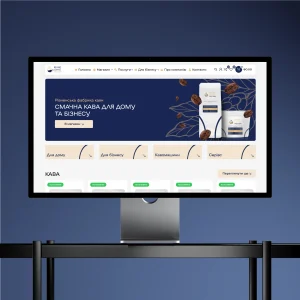
PROFESSIONAL DEVELOPMENT OF AN ONLINE STORE
As the basis for a high-quality online business, professional development of an online store is crucial. 90% of online stores close within the first year not because of their products, but because of poor technical implementation. At Estetic Web Design, we are changing these statistics in the e-commerce sector. The result is determined not by individual solutions, but by a holistic approach to platform design and implementation. For the Estetic Web Design team, quality in online store development means well-thought-out logic, technical reliability, and real business benefits. We build solutions that work equally well for both buyers and site owners.
During development, each element—from the catalog structure and data to the user interface—performs a specific business function. This approach allows us to create online stores that are easy to maintain, do not create unnecessary complications in operation, and scale smoothly as the project grows. A clear user journey, stable system performance, and convenient administration directly influence customer trust, repeat purchases, and brand reputation.
We avoid overloaded technical solutions and excessive complexity, focusing on logic and predictability of processes. This helps reduce risks when operating the site and get a tangible return on investment in the development of an online store.
HIGH LOADING SPEED OF THE ONLINE STORE
The speed of an online store directly affects how users interact with the site and whether they make a purchase. Modern visitors expect pages to load in 2–3 seconds, and any delays quickly lead to a loss of interest. Even a slight slowdown can negatively affect conversions, which is why speed metrics have become important not only for businesses but also for search engines. When evaluating website performance, we focus on Core Web Vitals metrics — LCP, INP (until March 2024, Google used the FID metric), and CLS — which reflect the real user experience using Google PageSpeed Insights, GTmetrix, and Lighthouse tools.
The platform’s performance is significantly influenced by technical solutions that are laid down at the development stage. A professional approach to creating an online store involves well-thought-out work with the database, optimization of server requests, the use of modern data transfer protocols, and correct caching settings. As a result, the site responds quickly to user actions, works stably even under load, and does not require excessive infrastructure costs. This has a positive effect on user experience and directly affects the effectiveness of online sales.
The following technical solutions are used to speed up loading and improve overall performance:
- server-side rendering (SSR) for fast display of main content;
- using CDN for fast access to static files from different regions;
- lazy loading for images and videos to reduce initial load;
- minification and concatenation of CSS and JavaScript files;
- Implementation of HTTP/2 or HTTP/3 along with optimization of database queries.
DATA SECURITY AND PROTECTION
Keeping personal and payment info safe is super important for keeping your online store running smoothly and keeping your customers happy. When you’re selling stuff online, your business faces all kinds of threats, from people trying to get in without permission to targeted attacks on your website’s servers. Ill-conceived protection can lead not only to data leaks, but also to financial losses, fines, and reputational risks. That is why the issue of security must be addressed at the platform development stage, rather than dealt with after the fact.
A reliable protection system combines technical and organizational measures that regulate the handling of accounts, user sessions, and payment information. Access control, correct processing of entered data, and restrictions on the use of third-party code help reduce the likelihood of vulnerabilities. Regular checks and updates also play an important role in helping to identify potential problems in a timely manner and maintain compliance with security requirements.
The following solutions are typically used to increase the level of protection for online stores:
- encrypting traffic using SSL/TLS (HTTPS) for secure data transmission;
- using WAF to filter and block malicious requests;
- two-factor authentication for administrative accounts;
- regular security checks and penetration testing;
- Configured backup with data recovery capability monitoring.
ADAPTIVE DESIGN AND MOBILE-FIRST
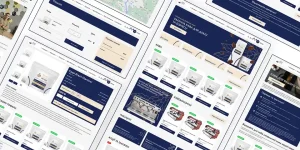
Mobile devices generate a significant portion of traffic in most niches, so it makes sense to start designing the interface with smartphones in mind. The Mobile-First approach focuses on the main scenarios of user interaction with the site, reducing unnecessary steps and simplifying navigation. After that, the interface is scaled for tablets and desktops, while maintaining logic and usability. This approach helps to avoid overloading the mobile version and maintain optimal loading speed.
From a technical standpoint, Mobile-First is implemented through responsive design, adaptive grids, media queries, and flexible image handling. Particular attention is paid to the convenience of touch control, text readability, and the size of interactive elements. Resource loading for mobile networks is optimized separately, and priority display of key content is configured. As a result, the online store works stably on different devices, demonstrates the best conversion rates from mobile traffic, and is correctly indexed by search engines, taking into account the Mobile-First approach.
INTUITIVE NAVIGATION AND UX DESIGN
A well-designed UX aims to help users intuitively understand how to interact with the website and effortlessly transition from browsing the catalog to placing an order. When developing a turnkey online store, the page structure, information presentation logic, and product card design must work as a single mechanism. The fewer doubts and unnecessary steps the buyer has, the higher the chances of completing the purchase. That is why special attention is paid to convenient search, clear filters, and logical placement of controls.
UX design directly affects the effectiveness of the sales funnel. An optimized user journey helps reduce the number of abandoned carts and has a positive impact on advertising campaign results. A simple and predictable interface builds trust in the site and makes it easier to make a purchase decision, especially for new visitors.
Key usability elements that are taken into account during design include a clear menu structure, advanced search, and an adapted and understandable ordering process. Guest checkout support, autofill fields, and logical prompts reduce purchase time and minimize errors. Error messages should be clear and helpful, and progress indicators in the shopping cart help users navigate each step. A/B testing, heat maps, and user behavior analysis are used to test and improve UX solutions.
UNIQUE ADVANTAGES OF ESTETIC WEB DESIGN
CHOOSING A PLATFORM FOR YOUR BUSINESS NEEDS
Instead of using closed or highly specialized solutions, we select a platform for an online store based on the specific goals of the project, the scale of the business, and development plans. This approach allows us to avoid limitations in the future and create a solution that really works for the business, rather than adapting the business to technical constraints.
In our work, we use proven platforms, each of which has its own strengths:
- Shopify — suitable for quickly launching and scaling online sales with minimal technical costs.
- WordPress (WooCommerce) — A universal solution for small and medium-sized businesses with flexible content management and extensive SEO capabilities.
- OpenCart — An effective option for online stores with a large product catalog and complex structure.
- Laravel — The choice for custom e-commerce solutions with non-standard logic and integrations.
- Next.js — A modern approach to headless architecture that provides high speed and flexibility in scaling.
This choice of platforms allows you to adapt the technical part to real business processes, rather than the other way around. Based on our experience in 2024-2025, stores on WordPress start to slow down after 3,000 products, so for large catalogs, we strongly recommend only Laravel or Next.js.
TECHNOLOGY FLEXIBILITY AND SCALABILITY
We do not limit projects to a single technology stack. This allows us to develop online stores gradually — from simple launches to complex omnichannel solutions with CRM, ERP, marketplace, and external service integrations. The flexibility of our technologies allows us to change or expand functionality without completely redesigning the site.
Every technology decision is made with consideration for the workload, volume of goods, logistics, and marketing tools that the business plans to use.
DEVELOPMENT OF AN ONLINE STORE ON Next.js
Creating a modern online store on Next.js is an investment in speed, performance, and high search engine rankings. The Next.js framework ensures lightning-fast page loading thanks to server-side rendering (SSR) and static generation (SSG), which is critical for successful online sales.
Our team develops fully functional online stores on Next.js: payment system integration, shopping cart, personal user account, filter and product search system. Thanks to React components, your store will have an intuitive interface and smooth navigation without reloading pages.
The advantages of Next.js for e-commerce are obvious: automatic image optimization, support for international versions of the site, excellent SEO out of the box. Your store will be quickly indexed by Google and receive high Core Web Vitals scores, which directly affects conversion and ranking.
We create responsive online stores that work perfectly on all devices, from smartphones to desktop computers. Next.js allows you to implement Progressive Web Apps (PWA), a technology that combines the advantages of a website and a mobile application. PWA enables offline store operation, instant reload on repeat visits, and the ability to install on a smartphone home screen without the App Store or Google Play. This increases user engagement and creates a premium app experience right in the browser. Integration with CMS, analytics, CRM systems, and marketing tools is included in the basic development package.
Order the development of an online store on Next.js and get a modern platform for scaling your business with technical support and quality assurance.
EXPERTISE AND INDIVIDUAL APPROACH TO PROJECTS
Each project is handled by a dedicated team that supports the online store at all stages—from developing technical specifications to launch and ongoing operation. The project manager coordinates processes and ensures clear communication between the client and technical specialists.
The team includes a UX/UI designer, front-end and back-end developers, an SEO specialist, and a QA engineer. After launch, we provide training on store management and support so that the client can fully utilize the platform and develop their business without technical barriers.
COMPARISON OF CMS PLATFORMS FOR ONLINE STORES
| Criterion | Shopify | WordPress (WooCommerce) | OpenCart | Laravel (Custom) | Next.js (Headless) |
|---|---|---|---|---|---|
| Solution type | SaaS platform | CMS with e-commerce plugin | E-commerce CMS | Custom development | Headless frontend |
| Best suited for | Fast market entry | Small and medium businesses | Stores with large catalogs | Complex business projects | High-load e-commerce |
| Time to launch | High | Medium | Medium | Medium (depends on complexity) | Medium (depends on complexity) |
| Customization flexibility | Limited | High | Medium | Maximum | Maximum |
| Scalability | Platform-limited | Server-limited | Medium | High | Very high |
| SEO capabilities | Good | Very strong | Good | Depends on implementation | High |
| Performance | Stable | Depends on optimization | Medium | High | Very high |
| License cost | Monthly subscription | Free CMS | Free CMS | None | None |
| Maintenance cost | Fixed | Variable | Variable | High | High |
| Integrations (CRM, API) | Limited | Extensive | Extensive | Unlimited | Unlimited |
| Code ownership | No | Full | Full | Full | Full |
| Headless support | No | Partial | No | Yes | Yes |
| Best choice for | Startups without a tech team | SEO-focused businesses | Large product catalogs | Omnichannel systems | Enterprise solutions |
SEO and marketing as tools for attracting customers
Search engine optimization and marketing are laid down at the stage of creating an online store, not after its launch. This allows you to immediately build the right site structure, page logic, and content, taking into account the requirements of search engines and real user behavior. Technical SEO, high-quality content, and paid promotion channels work as a single system aimed at achieving specific business results, rather than simply increasing traffic.
This approach allows you to get initial results faster and use your marketing budget more effectively. Analytics helps track which channels generate sales, not just traffic, and adjust your strategy in a timely manner. As a result, the store’s organic visibility increases, conversion rates improve, and a stable flow of customers is formed. It is systematic work with SEO and marketing that ensures a long-term return on investment in the development of an online business.
COMPLETE SEO OPTIMIZATION AND METADATA MANAGEMENT
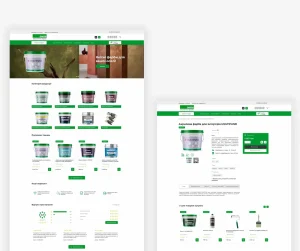
Comprehensive SEO optimization begins with understanding the demand and search logic of potential customers. Working out the semantics and correctly using key phrases in product names, categories, and descriptions increases the relevance of pages and helps the store consistently attract targeted traffic. It is important that each product has a unique description and that images have correctly filled attributes. This approach simplifies site indexing and has a positive effect on clickability in search results.
The technical component of SEO ensures that the website works correctly from the point of view of search engines. Configuring XML sitemaps, robots.txt, canonical tags, and structured data for products and reviews helps to avoid duplicate content and focus search engines’ attention on priority pages. Metadata is formed clearly and informatively: title tags are concise and meaningful, meta descriptions are understandable to users. Additionally, SEO-friendly URLs make the store’s structure logical and easy to understand for both visitors and search engines.
TOOLS FOR INCREASING THE AVERAGE CHECK (UP-SELL AND CROSS-SELL)
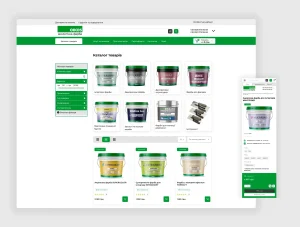
Increasing the average check allows businesses to grow without additional costs for attracting new traffic. Up-sell and cross-sell mechanisms work when the user is already interested in making a purchase, so they are perceived as useful advice rather than imposition. Additional offers may appear on the product page, in the shopping cart, or during checkout, complementing the main purchase and increasing its value for the customer.
The effectiveness of such tools increases significantly when recommendations are based on user behavior, browsing history, or shopping cart contents. It is important that blocks with additional products are logically integrated into the interface and do not interfere with the completion of the main action. Properly configured up-sell and cross-sell positively affect conversion and the overall revenue of the store.
The tools most commonly used to increase the average check include:
- recommendation blocks on product pages;
- “frequently bought together” suggestions in the shopping cart;
- personalized pop-up messages with additional products;
- package deals and discounts when purchasing sets;
- setting a minimum order amount for free shipping.
INTEGRATION WITH ANALYTICS AND ADVERTISING SERVICES (GA4, FACEBOOK PIXEL)
Analytics is the foundation for making informed marketing decisions. GA4 integration allows you to track user actions in event format and analyze their journey from first visit to purchase completion. This provides a better understanding of which pages and funnel stages are working effectively and where users are getting lost.
Meta Pixel is used to set up retargeting and optimize advertising campaigns on social media. The combination of these tools provides more accurate data on advertising effectiveness and allows for flexible budget management. Without accurate analytics, professional online store development does not provide a complete picture of the actual effectiveness of marketing channels.
Proper configuration of events and conversions includes tracking actions in the shopping cart, the start of the checkout process, and successful purchases. Based on this data, audiences for advertising are formed, A/B testing of ads is conducted, and the sales funnel is analyzed. This approach helps to identify weaknesses and systematically increase the profitability of advertising campaigns.
INTEGRATION OPTIONS WITH EXTERNAL SERVICES
Integration with external services turns an online store into part of a unified business ecosystem. Through API, the platform can interact with payment systems, delivery services, CRM, warehouse accounting, and other tools, automating key processes. We don’t just connect CRM, we set up end-to-end analytics (ROAS) so you can see the net profit from each ad. This reduces the number of manual operations and shortens order processing time.
Automated data exchange allows you to synchronize stock levels, update order statuses in real time, and avoid duplication of information. This approach is especially important for rapidly growing businesses with high sales volumes. Well-established integrations simplify scaling and allow you to flexibly change or connect new services without completely rebuilding the platform, adapting to market changes.
PAYMENT SYSTEMS AND ACQUIRING FOR STORES
Convenient and familiar payment methods directly influence a customer’s willingness to complete a purchase. Most users expect to be able to pay with Visa and Mastercard, as well as Google Pay and Apple Pay. For the Ukrainian market, it is important to integrate local services such as LiqPay, Privat24, Monobank, WayForPay, and Fondy. Offering multiple payment options reduces the number of abandonments at the checkout stage and expands the store’s audience.
From a technical standpoint, payment systems are connected via APIs, payment gateways, or provider hosting pages. Transaction security is ensured by compliance with PCI DSS standards, the use of 3D Secure, and payment data tokenization. When choosing an acquiring bank, consider commissions, currency support, and regional availability of the service. This approach allows you to select a payment solution that fits your business model and does not create unnecessary restrictions for customers.
DELIVERY AUTOMATION SERVICES
Automating delivery simplifies store operations and makes the order fulfillment process more transparent for the buyer. Integration with logistics services allows you to automatically calculate delivery costs, generate invoices, and transfer data to carriers without manual intervention. Customers can track their orders using a tracking number, which increases trust in the store and reduces the number of support requests.
Most popular delivery services provide APIs for exchanging data about shipments and statuses. Synchronization with WMS or ERP systems helps to correctly display stock levels and avoid errors when picking orders. Additionally, the store can offer various delivery options—courier delivery, pickup from a delivery point, or postal delivery. This increases convenience for the buyer and reduces the workload on the operations team.
SYNCHRONIZATION WITH CRM AND ACCOUNTING SYSTEMS
Integrating your online store with CRM and accounting systems allows you to consolidate all customer, order, and sales data in a single environment. This simplifies customer interaction management, automates marketing scenarios, and speeds up request processing. Up-to-date data on product availability, prices, and order statuses reduces the risk of errors and improves service quality.
Synchronization is achieved using APIs, webhooks, or special connectors that enable real-time information exchange. Centralized data storage facilitates analytics, sales forecasting, and inventory planning. As a result, manual work is reduced, and the business gains a more manageable and transparent sales process.
PLACING PRODUCTS ON MARKETPLACES (ROZETKA, PROM, GOOGLE SHOPPING)
Placing products on marketplaces allows you to quickly reach a wide audience of buyers who are already looking for ready-made solutions. To do this, product feeds are created in XML or CSV formats with up-to-date data on names, descriptions, prices, availability, and images. Regular synchronization is necessary to avoid discrepancies in prices and stock levels and to maintain the accuracy of information on all platforms.
When working with marketplaces, it is important to consider commissions, listing rules, and pricing features. A unified accounting system helps avoid pre-sales and duplicate orders. To simplify processes, use modules and services for automatic feed synchronization, which reduce manual work and allow you to effectively scale sales across multiple channels simultaneously.
READY-MADE SOLUTIONS FOR VARIOUS BUSINESS NICHE
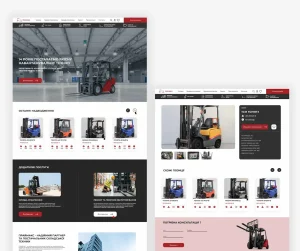
Each industry has its own requirements for functionality, design, and sales logic, so universal templates rarely deliver the expected results. That is why we use ready-made solutions adapted to specific niches that can be quickly customized to real business processes. They combine a proven structure with the possibility of flexible modifications, allowing you to launch a project without unnecessary delays and budget overruns.
When choosing a ready-made solution, it is important to evaluate not only the basic functionality, but also the potential for expansion. For example, online electronics stores need complex filters based on technical characteristics, while projects in the clothing or accessories segment need convenient work with sizes, colors, and visual content. The optimal solution is a combination of ready-made modules with specific modifications that take into account the specifics of the business. This approach to creating a turnkey online store allows you to maintain a balance between a quick launch and compliance with market requirements.
STAGES OF DEVELOPING AN ONLINE STORE
The process of developing an online store is structured in stages so that each step has a clear goal and predictable outcome. This allows us to control deadlines, budget, and quality of work, and allows the client to understand what stage the project is at. Transparent communication and the ability to make adjustments during iterations help avoid critical changes at the final stage.
Key stages include analytics, design, development, testing, and launch, followed by support. At each stage, the focus is on practical results rather than formal task completion. After launch, initial monitoring of the platform’s performance is carried out and initial marketing tools are connected, allowing for immediate sales without delays or technical issues.
BUSINESS NICHE ANALYSIS AND STRUCTURE DESIGN
The initial stage of work begins with an in-depth analysis of the business niche, target audience, and competitive environment. Based on this data, functional requirements are formed, and non-functional parameters are determined—performance, security, scalability. Next, the logical structure of the site is created: product categories, user interaction scenarios, and key conversion points.
Wireframes are used to agree on the logic of the future store, clearly showing the location of the main elements and the user’s path even before the design stage. At the same time, a technology stack is selected, taking into account the expected load and necessary integrations. It is at this stage that an understanding is formed of how much it will cost to create an online store and what the costs of further support will be. This approach allows you to lay a solid foundation for the development of the project and avoid limitations in the future.
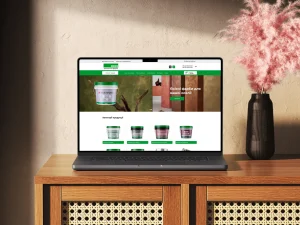
INTERFACE DESIGN AND LAYOUT
Work on the interface begins with prototyping and forming the visual logic of the future store. At this stage, the color palette, typography, button styles, and rules for using elements are determined so that the interface looks cohesive and supports the brand identity. The main task of the design is to make navigation intuitive and access to key information quick and understandable. We provide interactive access to layouts in Figma (PC and mobile versions), where you can view all layouts and understand what the site will look like after launch, as well as leave comments directly on the design. After the layouts are approved, the design moves on to the layout stage, taking into account adaptability to different screens.
Front-end implementation involves accurately translating the design into code while complying with accessibility and cross-browser standards. This is achieved using modern tools and approaches that ensure the website works correctly on different devices and in different browsers. Optimization of images, fonts, and animations has a positive effect on loading speed and user experience. Consistent styles and components simplify further updates and development of the interface without a complete redesign.
PROGRAMMING AND FUNCTIONAL CONFIGURATION
The programming stage involves implementing all the business logic of the online store: order processing, catalog management, payment processing, and integration with third-party services. The choice of architecture and database affects the speed, stability, and scalability of the project. Special attention is paid to security, access management, and the correct handling of payment information. Custom modules allow the system to be adapted to specific processes without interfering with the core of the platform.
The technology stack is selected individually depending on the project tasks — these can be modern frameworks and programming languages that are optimal for a specific type of store. The final cost of creating an online store directly depends on the complexity of the logic and the number of integrations. CRM, delivery services, and analytics are connected via API and webhooks, which ensures stable data exchange. Additionally, testing of individual components and automation of deployment are implemented, which reduces the risk of errors during release.
TESTING, FILLING, AND LAUNCHING THE PROJECT
Before opening an online store, a comprehensive check of its operation is carried out. It includes functional testing, load testing, security assessment, and acceptance testing by the customer. All identified deficiencies are eliminated before launch, after which the correctness of display on various devices and in popular browsers is additionally checked. At the same time, the site is filled with content: products, descriptions, categories, and service pages. If necessary, product descriptions can be generated using AI, which allows you to launch a store with 1,000 products in a week instead of a month.
The final stage includes deploying the project on a working server, configuring the domain, and connecting an SSL certificate. After launch, performance is monitored and initial marketing activities are launched to attract the first customers. The team provides documentation and training for administrators to ensure that store management is clear and fast. Further technical support is available for updates and resolving current issues, if necessary.
HOW MUCH DOES A TURNKEY ONLINE STORE COST?
The cost of a turnkey online store is determined on an individual basis and depends on the complexity of the design, functionality, chosen platform, and number of integrations. Performance, security, and future scalability requirements are also taken into account. A clear understanding of the tasks at the outset allows us to create a transparent budget and deliver a solution that will work effectively for your business from day one.
ONLINE STORE DEVELOPMENT PACKAGES
| Package | Price from (UAH) | Functionality | Technologies |
| Economy | 65 000 | Template design (ready-made solution), basic SEO optimization, basic online store functionality, online payment module, Nova Poshta delivery module, product filters, catalog content up to 100 products, 1 language version, responsive layout, basic CMS settings, 2-week warranty | CMS: WordPress/Opencart |
| Standard | 90 000 | Stylized template for the brand, extended functionality (live search, personal user account), integration with CRM, SSL certificate, analytics connection, 2-week guarantee | CMS: WordPress/Opencart |
| Business | 120 000 | Custom design, custom functionality for business processes, preparation for scaling, headless architecture capability, SEO optimization, technical support (bug fixes) for 1 month | CMS: WordPress/Opencart |
| Customized solution | 250 000 | Customized e-commerce solution, unlimited product catalog, complex integrations (CRM, ERP, marketplaces, logistics), high security and performance requirements, technical support (bug fixes) for 3 months. | Laravel, Next.js |
Each package can be supplemented
If necessary, any online store development package can be expanded with additional options, depending on business objectives and development plans:
- multilingual settings (Ukrainian, Russian, English);
- implementation of CRM modules and integrations with accounting systems;
- additional SEO services and content support.
The final price for creating an online store is determined individually after agreeing on the technical specifications and clarifying all project requirements.
To receive a preliminary estimate, simply submit a request on our website or contact us in any convenient way.
THE COST OF DEVELOPING AN ONLINE STORE – WHAT DOES THE BUDGET CONSIST OF?
The development of an online store takes place in several consecutive stages. This approach allows for transparent budget planning and control of the results at each stage.
- Analysis and planning
Formulation of project goals and objectives, analysis of the target audience, market, and competitors. Preparation of a detailed work plan with deadlines and a preliminary budget.
Cost: from 3,000 UAH - Engineering and design
Building the site structure, developing UX and UI layouts, defining the visual style: colors, fonts, and page design logic.
Cost: from 24,000 UAH - Development and programming
Frontend and backend implementation, integration of the selected CMS. Integration with ERP or warehouse systems for synchronization of goods and stock levels. Connection of payment gateways in accordance with security requirements, configuration of delivery services.
Cost: from 28,000 UAH - Content filling
Uploading product cards: images, descriptions, specifications, and prices. Automatic or manual export from accounting systems is possible.
Cost: from 5,000 UAH - Testing
Comprehensive testing of all modules, bug fixes, cross-browser and responsive testing on various devices.
Cost: from 3,000 UAH - Project launch
Website hosting, domain connection, final check after transfer to the working server.
Cost: from 2,000 UAH - Support and development
Technical support, content updates, regular SEO optimization, analytics, and refinement of marketing tools.
Cost: from 25,000 UAH/month
Ready to start your project?
Contact us for a free consultation and receive a detailed cost estimate tailored to your business needs. Our team will analyze the specifics of your niche and offer the best solution. Submit a request on our website or write to us — we will respond within a couple of hours and help take your online business to a new level of productivity.